EVE 225 - Linear mixed models in ecology & evolution
I really love teaching statistics. I am a firm believer that being a better statistician will help you be a better scientist. Unfortunately, I think lots of students are scared away from statistics early on and don't realize the elegance and simplicity of most statistical methods.
EVE 225 covers the statistical theory and practical application of general linear models and general linear mixed models using examples drawn from evolutionary and behavioral ecology. It focuses specifically on the analysis of clustered data, e.g. samples taken from the same lake, or measurements made on the same animal, which are common in ecological and evolutionary research. Students will learn 1) the assumptions of traditional linear models and 2) how such hierarchical or nested data violate these assumptions. Students will then learn 3) to build, select and validate mixed models that include random effects and 4) how to interpret and report such results for publication. The lecture portion of the course will focus on building the students’ conceptual framework of the underlying statistics of such models and the discussion/lab section of the course will focus on the hands-on application of each week’s knowledge for analyzing and interpreting example data sets in the statistical computing language R. The course is designed to build on knowledge students would have gained in a basic statistics (e.g. ANOVA, regression) or experimental design course and provide a firm conceptual foundation for students who wish to take more advanced statistical or modeling courses.
A general syllabus for the class and what topics will be covered can be found here.
The recordings for the class from Winter 2023 can be found here.
The recordings for the class from Summer 2020 (when it was taught as a 10-day workshop) can be found here.
EVE 225 is offered every other Winter Quarter in odd years.
Data Detectives: Becoming responsible consumers of scientific expertise and scientific communication
We stand on the shoulders of giants – science is an iterative process where each new study builds on previous studies. These studies are then communicated to the public informing critical policy decisions from environmental protections to health care decisions. But what if the scientific studies are not sound? Or what if the information pathways that translate scientific findings to societal decisions get sidetracked, or worse, corrupted?
In this First Year Seminar, we will explore what happens when scientific papers and scientific communication fails. Each week, we’ll read about a case study of a research paper that has been either suffered from problems itself or been portrayed inaccurately in the media. We’ll act as “data detectives” to uncover what went wrong and why. We’ll deal with cases where scientific publications were ultimately retracted either due to either honest mistakes or more serious problems such as a fraud or misconduct. Similarly, we will learn to be skeptical and critical consumers of bold claims in the media and better understand the ethics of scientific research, publishing, and communication.
Data Detectives is taught every other Winter Quarter in odd years. The syllabus with links to all the readings and discussion guides can be found here
Outreach and broadening participation in science
The Amazon Warrior team is passionate about outreach and broadening participation in science to individuals from groups that have been historically excluded from academic research. In addition to public outreach events, we also participate in several programs designed to share our science with the general public including UC Davis's Ecological and Evolutionary Response to Rapid Environmental Change (EEREC) REU program and the Young Scholars' Program
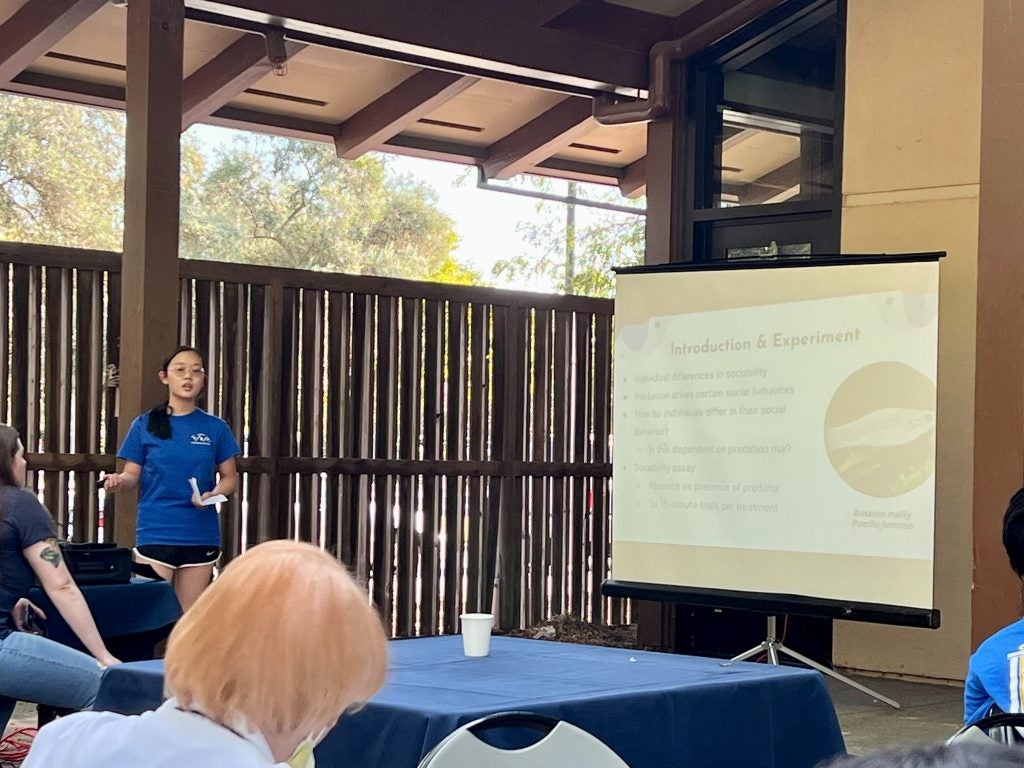
YSP student Sophia Jin presents results of her summer research project (summer 2022)
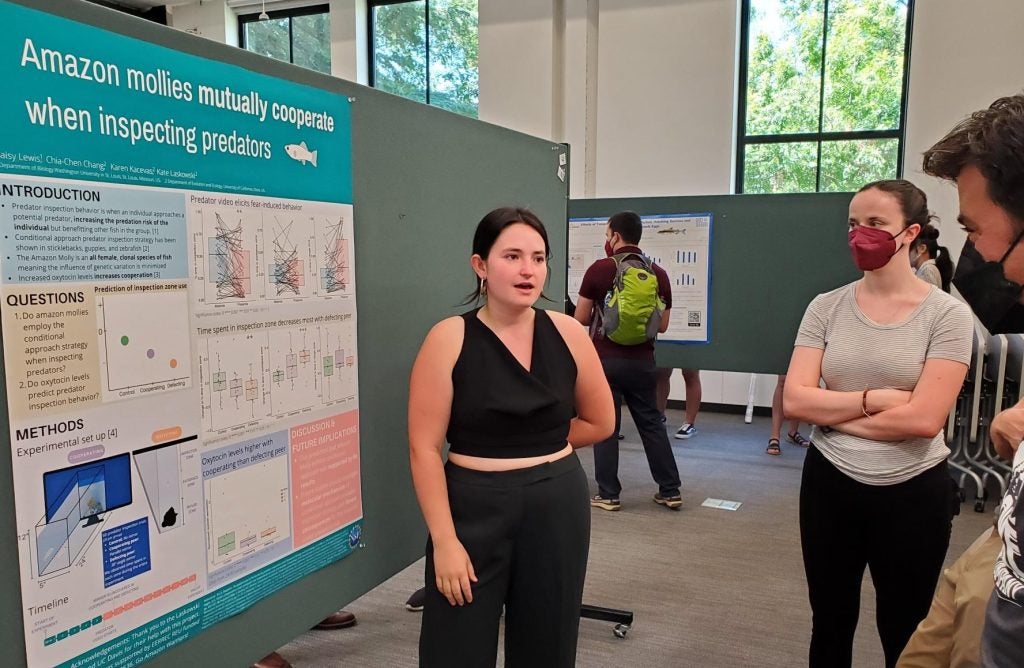
Daisy Lewis, REU student extraordinaire, presents her research project at UC Davis (summer 2022)
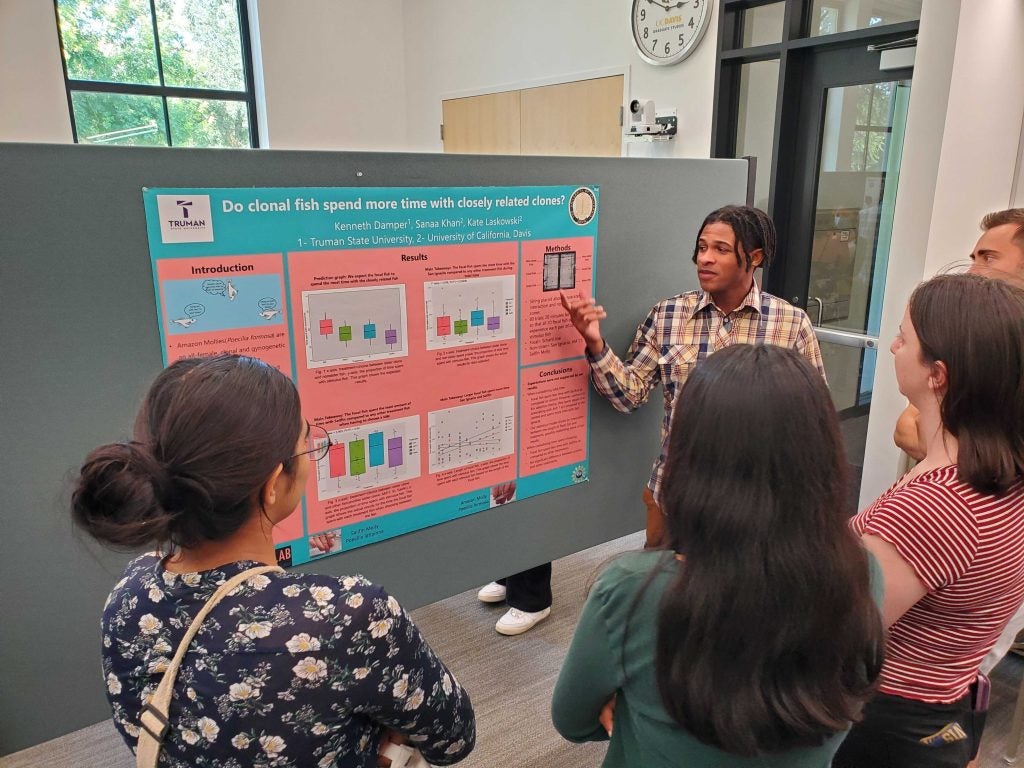
REU student, Kenny Damper, presents his summer project at the research symposium (summer 2023)